
As an Amazon Associate, we earn from qualifying purchases. This post contains affiliate links; buying through them costs you nothing extra.
You came home to a shredded shoe, a gnawed table leg, or the stuffing pulled out of a couch cushion, and now you are wondering what is going on in your dog’s head. Wondering why your dog chews everything in sight is one of the most common complaints among dog owners, and the frustrating truth is that your dog is not doing it to spite you. If you keep asking why does my dog chew everything, the first answer is reassuring: chewing is a normal, healthy dog behavior. The problem is what they are chewing, not that they are chewing.
The good news: once you understand why your dog is chewing, redirecting it is very doable. Here is how to figure out the cause and turn destructive chewing into a habit you can live with.
Why Does My Dog Chew Everything? (It Is Normal, Mostly)
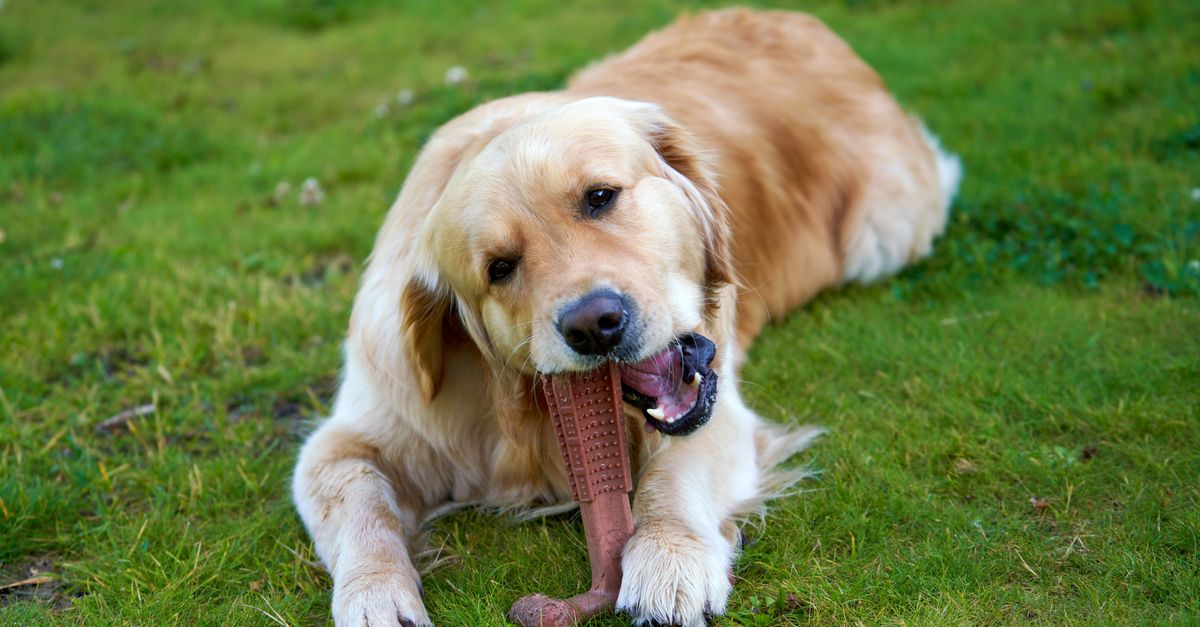
Dogs explore the world with their mouths the way we use our hands. Chewing relieves boredom, eases stress, keeps jaws strong, and just plain feels good. A dog that never chews anything would actually be unusual.
So your goal is not to stop chewing altogether, which is neither realistic nor fair to the dog. Your goal is to give your dog acceptable things to chew and make the off-limits items boring or unavailable. When people try to punish chewing out of existence, it usually backfires and can create anxiety that makes the chewing worse.
Puppies vs. Adult Dogs
The cause often depends on your dog’s age, so start there.
Puppies chew because they are teething and because everything is new. Puppy teething discomfort peaks between roughly three and six months, and chewing brings relief to sore gums. This phase is temporary, but it is intense, and a puppy left with access to your belongings will find them.
Adult dogs that chew destructively usually are not teething. For them, the cause is almost always one of three things: boredom, too little exercise, or stress and anxiety. If your previously well-behaved adult dog suddenly starts destroying things, that change is a clue worth paying attention to.
Boredom and Too Little Exercise
This is the single most common reason behind adult destructive chewing, and it is also the easiest to fix.
A dog with pent-up physical and mental energy will find an outlet, and your furniture is a convenient target. Under-exercised dogs, high-energy breeds especially, are basically telling you they need a job. Before you blame the dog, ask honestly whether they are getting enough daily activity.
The fix is more enrichment, not just more scolding:
- Increase daily walks or active play, aiming for real physical tiredness, not a quick trip around the block.
- Add mental work: puzzle feeders, snuffle mats, training games, and hiding treats around the house.
- Rotate toys so a few stay novel instead of leaving everything out at once.
- Use a stuffed, freezable chew toy to keep your dog busy during downtime.
A tired, mentally satisfied dog simply has far less drive to destroy things.
Separation Anxiety and Stress Chewing
If the chewing happens mainly when you are gone, and especially if it comes with pacing, whining, drooling, or accidents, you may be looking at separation anxiety rather than boredom.
Stress chewing is a coping mechanism, so the fix is different. Simply adding toys will not resolve true separation anxiety. These dogs need help feeling safe when alone, through gradual desensitization to your departures, calm arrivals and goodbyes, and a comfortable, secure space. Severe cases benefit from a certified trainer or veterinary behaviorist, and your vet can rule out medical contributors and advise whether additional support is warranted.
Do not punish anxiety-driven chewing. To an already stressed dog, punishment adds fear and usually makes the behavior worse.
How to Redirect Chewing the Right Way
Whatever the cause, the day-to-day method is the same: prevent access to the wrong items, and reward chewing on the right ones.
1. Manage the environment. Until the habit is retrained, keep tempting items out of reach and use baby gates or a crate when you cannot supervise. You cannot correct what you are not there to see.
2. Offer better options. Provide a small variety of appropriate chew toys with different textures so your dog has an obvious legal outlet.
3. Trade, do not chase. When you catch your dog with a forbidden item, calmly swap it for an approved toy and praise them for taking it. Chasing turns it into a fun game.
4. Reward the good choice. Every time your dog chooses their own toy, praise or reward it. Dogs repeat what pays off.
5. Make off-limits items unappealing. A pet-safe bitter deterrent spray on furniture legs or cords can help, paired with plenty of legal alternatives.
Consistency from everyone in the household is what makes this stick. Mixed messages slow everything down.
Puppy-Proofing and Dog-Proofing Your Home
Management prevents most disasters while training catches up. Use this quick checklist:
| Area | Risk | Quick fix |
|---|---|---|
| Shoes and laundry | Favorite chew targets | Closed closets, lidded hampers |
| Electrical cords | Chewing hazard, dangerous | Cord covers, route out of reach |
| Trash and food waste | Scavenging and chewing | Lidded or cabinet-latched bins |
| Furniture legs | Boredom chewing | Bitter deterrent plus chew toys nearby |
| Kids’ and pet toys | Easily confused with dog toys | Store separately, teach what is theirs |
| Houseplants | Some are toxic if chewed | Move up high, remove toxic species |
When Chewing Signals Something Bigger
Most chewing is behavioral, but check in with your vet if chewing is sudden and extreme, if your dog is eating and swallowing non-food objects (a dangerous condition called pica), if there are signs of mouth pain, or if it comes with other worrying changes. Compulsive chewing and true separation anxiety are also worth professional guidance rather than going it alone.
Final Thoughts
Destructive chewing feels personal, but it is really your dog communicating a need, usually for a teething outlet, more activity, or relief from stress. Meet that need, manage the environment so mistakes cannot happen, and consistently reward the right choices, and the shredded shoes become a thing of the past. Be patient: you are replacing a deeply natural behavior’s target, not erasing the behavior, and that takes a few weeks of steady effort.
For further reading, see the ASPCA guide to destructive chewing.
Related reading: Double Handle Dog Leash Review: Plutus Pet 6 FT Lead and Reflective Dog Leash Review: BAAPET Padded-Handle Lead.
Gear that helps with this
These are products we have reviewed in full, chosen because they address the specific problem covered above — not because they are the cheapest or the most advertised.
- Ring Pan-Tilt Indoor Cam — Recording the first hour alone tells you when the chewing starts, which the plan above depends on. Read our full review.
- iYoShop hands-free bungee leash — A hands-free lead makes the long pre-departure walk easy enough that you actually do it daily. Read our full review.
The Smart Dog Owner’s Gadget Checklist
20 gadgets worth owning, 8 to skip, and how to choose the right one — sent straight to your inbox.